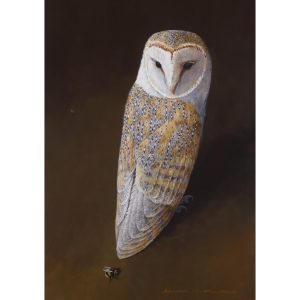
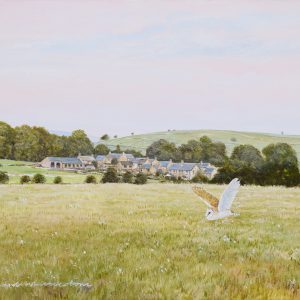
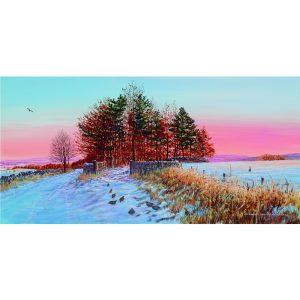
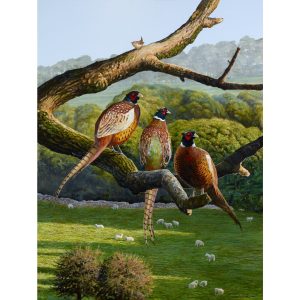
Richard Whittlestone is a contemporary British wildlife artist known for highly detailed, realistic paintings of birds, animals, and countryside scenes. Raised on a Yorkshire farm, he developed an interest in drawing at a young age and later became a professional, self-taught artist whose work has been exhibited and collected internationally. His paintings often focus on British wildlife and reflect careful observation of nature.
One of the most distinctive features of Whittlestone’s work is that he hides a tiny fly in every painting. What began as a small detail in some early works became his trademark, and viewers now often enjoy trying to find the fly, which can be very subtle and easy to miss.
The hidden fly serves as a playful signature but also encourages people to look more closely at the artwork and notice small details in the scene. This reflects Whittlestone’s wider artistic approach, which emphasizes patience, observation, and an appreciation of the often-overlooked details of the natural world.
His use of a hidden fly also connects loosely to a longer artistic tradition, as painters in earlier centuries sometimes included flies in their work to show realism or to add symbolic meaning. In Whittlestone’s case, however, the fly is mainly a personal and engaging feature that has become a recognizable hallmark of his paintings.
Richard has a gallery and studio on the Chatsworth Estate, where you can find him most days busy painting. He lives a few miles away in the Peak District, surrounded by dogs, ponies, tame pheasants and partridges.